What Areas Should I Monitor with CCTV? The Ultimate Security Guide
Purchasing a top-of-the-line CCTV system is only the first step. The true foundation of an impenetrable security perimeter lies in answering one critical question: what areas do I need to monitor with CCTV? At ZOD, we have seen how a poorly positioned camera provides a false sense of security, while a strategically placed system transforms your property into a hardened, evidence-gathering asset. This guide walks you through the most critical locations, backed by expert insights and a proven defence-in-depth strategy.
Why Camera Placement Is the Deciding Factor
Before identifying specific zones, it is essential to understand why placement dictates the success of your entire surveillance system. Security professionals continuously analyse criminal behaviour to identify chokepoints, entry vectors, and high-risk zones.
When a crime does occur, the forensic value of your footage is determined entirely by where your cameras point. Law enforcement relies on specific identifying details like facial structures, licence plates, tattoos, and clothing. A camera mounted too high, aimed at the sun, or pointed at a low-priority area loses this critical data and renders your investment useless when it matters most.
The Core Principle
Strategic CCTV placement transforms your cameras from passive recorders into an active, highly effective security grid. Position them to capture identifiable evidence, not just proof that something happened.
Critical Exterior Areas to Monitor with CCTV
The exterior of your property is your first line of defence. A robust exterior surveillance strategy detects threats before they breach your physical perimeter. Below are the most critical outdoor zones to cover.
1. The Front Door and Main Entrances
Statistics consistently show that over 34% of burglars enter directly through the front door, making this your most critical camera position, full stop. Cameras here should be mounted higher than the ground: high enough to prevent easy tampering, low enough to capture clear facial details. Because front doors experience extreme lighting contrast between a bright exterior and a shaded porch, an adequate CCTV will be recommended by our experts to handle exactly this challenge.
2. Back Doors, Side Doors, and Secondary Entrances
While the front door is the most common point of entry, the back door is the most secretive. Approximately 22% of break-ins occur via rear or side access, areas shielded from street view, hidden behind fencing or landscaping. Cameras covering these zones must be equipped with high-performance vision. Pairing them with motion-sensor floodlights simultaneously deters anyone lurking in the shadows and dramatically improves image quality for evidence capture.
3. Driveways, Garages, and Parking Areas
Driveways and garages are high-value targets. They house expensive vehicles and often provide direct, unsecured access to the main building. A wide-angle camera covering the full length of the driveway down to the street is the baseline requirement. For properties at elevated risk, a ZOD expert should recommend the best type of CCTV and its placement, enabling automatic alerts the moment an unrecognised vehicle enters the property.
4. Blind Spots and Dark Alleys
Every property has blind spots, awkward corners, dense planting, or narrow side walkways invisible from windows. Criminals identify and exploit these zones to observe your property undetected. Conduct a full perimeter walk at night to map these vulnerabilities. Installing wide-angle dome cameras under roof eaves and creating overlapping fields of view eliminates these gaps entirely, building an inescapable surveillance net.
Interior CCTV Coverage: Protecting a Breached Perimeter
While the goal is to keep intruders outside, a comprehensive security plan must account for the possibility of a breached perimeter. Interior CCTV coverage tracks movement through controlled lighting conditions, protects high-value assets, and provides the clearest possible facial recognition footage for prosecution.
Ground Floor Windows
Hidden windows are heavily used entry points. Interior cameras positioned nearby capture the exact moment of a breach, often producing exceptionally clear footage thanks to consistent indoor lighting.
Hallways & Staircases
Security experts call these chokepoints. Every intruder must move through them regardless of entry point.
Home Office & Valuables Storage
Criminals target cash, jewellery, prescription medication, firearms, and small electronics. Monitor the area around your safe, high-end computing equipment, and any space containing irreplaceable assets.
Safe Room & Server Rooms
For high-net-worth residences and commercial facilities, any room housing a physical safe or critical data infrastructure deserves dedicated surveillance.
Specialised CCTV Monitoring for Commercial Spaces
Commercial CCTV requirements extend well beyond perimeter defence. Businesses must monitor for external theft, internal employee pilferage, fraudulent liability claims, and operational compliance. If you are securing a commercial property in Lebanon, your surveillance network must cover the following critical zones.
What ZOD’s CCTV System Delivers
Not all CCTV systems offer the same level of coverage or intelligence. ZOD Protection’s IP camera surveillance systems are engineered for environments ranging from single apartments to large industrial facilities, with the features that professional placement strategies demand.
| Feature | ZOD CCTV System | Why It Matters |
|---|---|---|
| HD & 4K Resolution | ✔ Yes | Captures facial details and licence plates at distance |
| Infrared Night Vision | ✔ Yes | Full clarity in complete darkness at back doors and alleys |
| Wide Dynamic Range (WDR) | ✔ Yes | Eliminates glare and silhouette problems at front entrances |
| Wide-Angle & Varifocal Lenses | ✔ Yes | Covers driveways and large open areas without blind spots |
| AI-Powered Smart Analytics | ✔ Yes | Detects and flags unusual movement patterns automatically |
| Real-Time Alerts to Mobile | ✔ Yes | Instant notification the moment a camera detects motion |
| Professional Installation & Maintenance | ✔ Yes | Expert design, installation, and ongoing support from ZOD’s certified team |
| Long-Range Surveillance (up to 300m) | ✔ Yes | Extended coverage for large properties and industrial sites without extra power sources |
Areas to Avoid: Legal and Privacy Limitations of CCTV
Knowing where to place your cameras is just as important as knowing where not to place them. CCTV deployment is governed by privacy laws built around the concept of a “reasonable expectation of privacy.” Recording someone in a space where they reasonably expect not to be observed is a serious legal violation.
🚫 Bathrooms, Bedrooms & Changing Rooms
Installing cameras in these spaces violates both local privacy law and basic ethics, regardless of stated intent. If a safe must be monitored inside a bedroom, the camera must be explicitly aimed at the safe or entry door only, and all residents must be fully informed.
🚫 Neighbouring Properties
You have the right to monitor your own property, not your neighbour’s. Cameras must not be intentionally aimed at a neighbour’s garden, windows, or private enclosures.
CCTV as Part of a Layered Security Strategy
At ZOD Protection, we advocate for a defence-in-depth approach, multiple overlapping security layers that make your property an unattractive and genuinely difficult target at every stage of a potential intrusion attempt. CCTV is Layer 3 in this hierarchy, and it performs best when built on the layers beneath it.
Layer 1: Perimeter Hardening
Security fencing, wall spikes, and concertina wire solutions from ZOD Protection’s Fence & Concertina range raise the physical effort required to approach the property, discouraging opportunistic criminals before a camera even enters the equation.
Layer 2: Detection and Warning
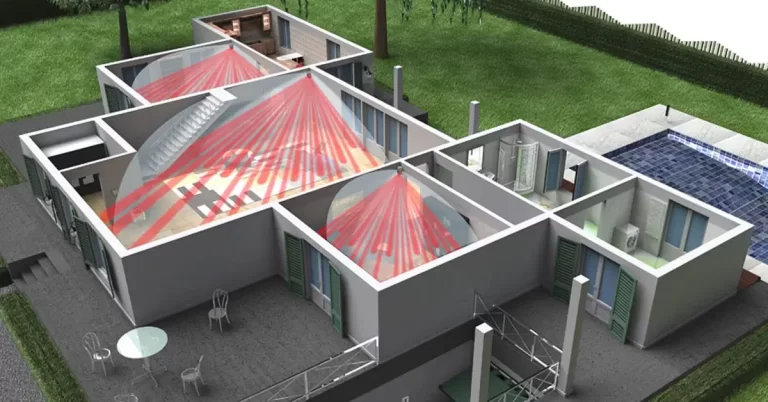
ZOD Protection’s burglar alarm systems cover three detection layers: outdoor perimeter barriers, door and window sensors, and indoor dual-technology motion detectors. When triggered, instant alerts are dispatched, creating a detection layer that works in direct tandem with your CCTV coverage.
Layer 3: CCTV Surveillance and Evidence
A properly positioned CCTV network deters intruders who recognise they are on camera, records irrefutable evidence, and provides law enforcement with the footage needed for prosecution. This layer performs its best function only when cameras cover the zones outlined by our experts.
Layer 4: Access Control
Controlling who can physically enter is as important as detecting unauthorised access. ZOD Protection’s access control solutions, including biometric readers, video interphones, and guard control units, ensure only authorised individuals can enter sensitive areas, creating a final, accountable layer of defence.
Building Your CCTV Strategy: A Tailored Approach
Answering the question “what areas do I need to monitor with CCTV?” requires a property-specific assessment. No two sites are identical, and the right placement strategy for a Beirut apartment will differ from a commercial warehouse in Jounieh. By prioritising main entrances, eliminating exterior blind spots, locking down interior chokepoints, covering commercial-specific zones, and strictly respecting privacy law, you create a comprehensive surveillance network that both deters crime and captures evidence when deterrence fails.
Ready to Secure Every Angle?
ZOD Protection’s expert team will assess your property, identify your critical camera zones, and design a surveillance system tailored to your specific vulnerabilities, with professional installation and 24/7 support.